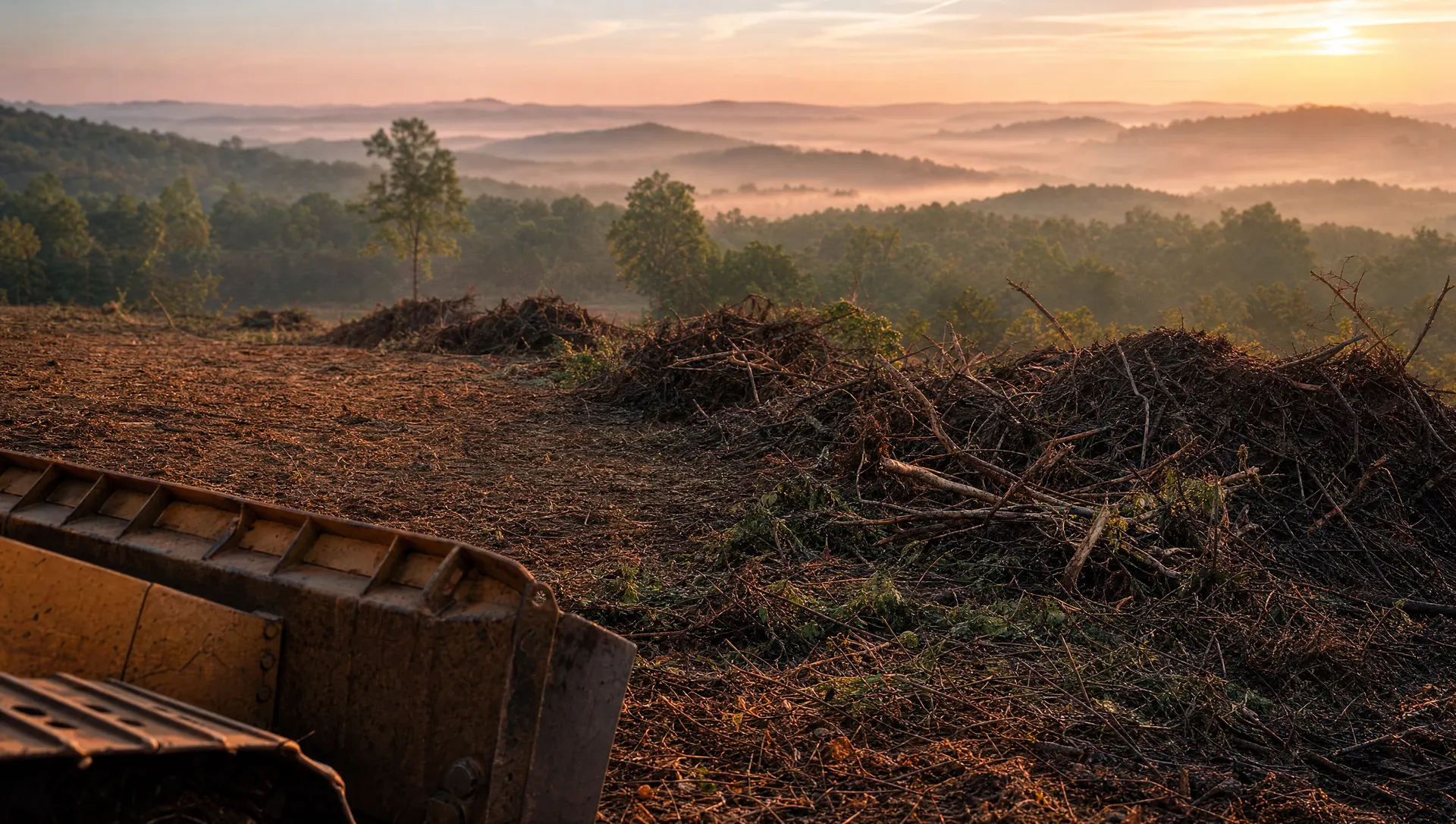
Brush Clearing & Forestry Mulching in West Plains, MO
Forestry mulching is the go-to method for dealing with cedar thickets, blackberry brambles, and general brush overgrowth without tearing up the ground underneath. A mulching head grinds standing brush, cedar, and small trees into mulch right where it stands, leaving that material spread across the ground instead of piled up or hauled away. For a lot of properties around West Plains, it's the most practical way to knock back years of overgrowth and get ground back to a usable state.
West Plains Land Clearing handles brush clearing and forestry mulching across Howell County — pasture edges, fence lines, glade ground, and acreage that's slowly disappeared under cedar and brush.
What Brush Clearing & Forestry Mulching Includes
Mulching work typically covers:
- Grinding standing cedar, brush, saplings, and small trees into mulch, generally up to a certain trunk diameter depending on the equipment
- Clearing along fence lines so they're visible and walkable again
- Opening up pasture edges and glade ground that's been crowded out by cedar
- Leaving the ground covered in mulch rather than bare dirt, which helps hold soil in place afterward
- Selective clearing around trees or features you want to keep, when that's part of the plan
Mulching generally isn't the right tool for large mature trees or for ground that needs to end up completely bare and root-free — that's more of a land clearing or stump removal job, and we'll tell you honestly if your project needs a different approach.
Why Mulching Fits So Much Howell County Ground
Cedar is the reason forestry mulching comes up so often around West Plains. Eastern red cedar spreads fast once it gets a foothold in pasture or glade ground, and a mulcher is a genuinely efficient way to deal with a dense cedar stand — it grinds trunks and branches in one pass instead of requiring separate cutting, piling, and disposal steps.
Mulching also suits the hilly, rocky character of a lot of Ozark ground. Because it disturbs less topsoil than pushing and dozing, it tends to hold up better on slopes, where exposed dirt is more prone to washing during a hard rain. And because the ground stays closer to intact, mulched pasture often has an easier path back to grass than pasture that's been scraped down to bare subsoil.
Timing plays a role too. Cedar is evergreen, so a stand mulches about the same in any season, while deciduous brush and saplings are easier to see — and the ground underneath easier to read — once leaves are down in late fall and winter. Neither factor rules a season out on its own, but both are part of how we plan a job around a specific property.
Blackberry brambles and general brush respond well to mulching too — the same pass that handles cedar generally handles bramble thickets and volunteer sprouts growing up along a fence line or field edge, ground that's often too tangled to reach with a bush hog by the time someone calls about it.
When to Call for Brush Clearing & Forestry Mulching
Mulching is usually the right call when:
- Pasture is losing usable acreage to cedar encroachment year over year
- Fence lines or field edges have disappeared into brush and brambles
- You want brush cleared without stripping the ground down to bare dirt
- The property has slopes or rocky ground where heavier equipment and soil disturbance are more of a concern
- You'd rather the cleared material stay on-site as mulch than be hauled off or burned
What Brush Clearing & Mulching Costs
Cost typically scales with density and acreage more than almost anything else. Scattered cedar and light brush mulch quickly and cost less per acre; a dense, mature cedar thicket with heavier trunk diameter takes longer per acre and costs more, since the mulching head is doing more work per pass. Terrain factors in too — steep or rocky ground slows the work compared to flat, open pasture. Access for equipment matters as well; ground that's easy to reach clears more efficiently than an isolated back section of a property. We look at the actual density and terrain before giving a number, since "brushy" can mean very different things from one property to the next. Because mulched material is left on-site rather than hauled or burned, mulching jobs typically avoid the extra debris-disposal cost that comes with pushing and dozing — one more reason it tends to be the more economical option on brush-heavy ground.
Does mulching kill cedar and brush permanently, or does it grow back?
Mulching removes what's standing at the time of the work, but it doesn't sterilize the ground against future cedar seed, which typically arrives by way of birds from nearby trees and fence lines. Cedar and brush can return over time if the ground isn't managed afterward — grazing, mowing, or periodic follow-up clearing all help keep new growth from turning into another thicket. Mulching resets the clock; it doesn't permanently end the cycle on its own.
Can mulching handle blackberry brambles, or just cedar and trees?
Mulching handles bramble thickets well, generally in the same pass as cedar and brush. Blackberry canes and the woody brush that often grows up alongside them are exactly the kind of material a mulching head is built for. If a fence line or field edge has gone from grass to a wall of brambles, mulching is typically the most efficient way to open it back up.
How big of trees can a mulcher handle?
It depends on the equipment, but mulching heads are generally built for brush, saplings, and small-to-medium trees rather than mature timber. Larger trees on a property usually get handled separately — cut and either left for firewood, pushed out, or worked around — while the mulcher clears everything smaller in the same pass. We'll look at what's actually standing on your property and tell you which parts are a mulching job and which parts need a different approach.
Get a Free Quote on Mulching Your Property
Tell us how much ground is overgrown and what you're hoping to do with it once it's cleared. We'll give you a straight, free quote.
Got Ground to Clear in Howell County?
Tell us about the acreage and we'll get back fast with a free, no-pressure quote.